When the rich aroma of beef tallow arrives, carrying the searing heat of chilies and the tingling numbness of Sichuan peppercorns, you are facing more than just a meal. It's a flavor adventure. Amid the global "hot pot" trend, Chongqing hot pot stands out with its distinctive red symphony, an unmissable gustatory experience.
It doesn't cater or compromise — it welcomes you into a world of numbing-spicy, savory-freshness with the most direct sensory impact. Here, every bite redefines your palate.
II. The Ingredient Map: From Beef Tripe to Shrimp Paste
The Essential Trio (Must-Try Decoded)
The inner lining of a cow's stomach, the soul of Chongqing hot pot. Its secret lies in the art of achieving crisp tenderness through the "seven ups, eight downs" technique: dipping and lifting it eight times over 10 seconds in the boiling red broth. The instantaneous crunch is irreplicable.
The cardiovascular tissue of pigs or cattle. The name might sound intimidating, but the texture is a delightful surprise. Devoid of any offal taste, it offers pure, crisp chewiness, like a thin, resilient cartilage.
The perfect partner for the spicy and numbing dance. Fresh duck blood curd is dark red; cooked, its texture becomes as smooth as tofu, absorbing the broth's rich flavors, delivering a juicy, satisfying mouthful with every bite.
The Meat Matrix
Fatty beef slices and tender beef slices are staples, but timing is everything. Fatty beef only needs to be cooked until the color changes (about 30 seconds), allowing the fat to melt on your tongue. Tender beef slices require a bit more time but must never be overcooked, lest they lose their tenderness.
Seafood Variations & Vegetable Harmony
Shrimp paste and fish balls add variations of freshness. Form the shrimp paste into small balls with a spoon; eat them as soon as they float. Fish balls need to be cooked until fully expanded.
Vegetables like cabbage and bean sprouts are not just palate cleansers; they are key to balancing the heat. They absorb the broth's flavors while releasing their natural sweetness.

When faced with a Chinese menu, remember these keywords:
- Beef Tripe —
毛肚(Mao Du) - Pork/Beef Aorta —
黄喉(Huang Hou) - Duck Blood Curd —
鸭血(Ya Xue) - Shrimp Paste —
虾滑(Xia Hua) - Fatty Beef Slices —
肥牛(Fei Niu)
Start with the essential trio and gradually explore your preferences.
III. Decoding the Broth: The Chemistry of Beef Tallow and Spices
The Four Core Elements
- Beef Tallow Base — The source of richness. Unlike vegetable oil, beef tallow remains stable at high temperatures, locking in spice flavors and creating a unique "mouth-coating" sensation.
- Chili Matrix — Chaotian chilies provide direct, sharp heat, while Erjingtiao chilies deliver a lasting, fragrant spiciness. Their ratio determines the layering of heat.
- Sichuan Peppercorn Duo — Green peppercorns contribute a floral, fresh numbing sensation; red peppercorns offer a deeper, more mellow numbness. Numbness is not pain, but a 50Hz vibration.
- Pixian Doubanjiang — Fermented broad bean paste provides savory depth and the signature red hue. This is the secret weapon that distinguishes Chongqing hot pot from other numbing-spicy flavors.

Craftsmanship Essence: Slow Stir-Frying
All spices must be slowly stir-fried in beef tallow over low heat for 20–30 minutes. Temperature control is key: too high causes burning and bitterness; too low fails to release the aromas fully.
Flavor Science Brief: Beef tallow's richness + chilies' heat + peppercorns' numbness + doubanjiang's savory depth = Chongqing hot pot's unique "numbing, spicy, fresh, fragrant, crispy" profile. This is not simple addition but molecular-level flavor fusion.
IV. The Art of Dipping Sauce: A Game of Personalized Flavoring
Two Classic Styles
Base: Sesame oil + minced garlic + cilantro + green onions
Upgrade: Add oyster sauce for umami, a dash of vinegar to cut grease
Role: Sesame oil forms a protective layer, mitigating spiciness; garlic adds aroma and acts as an antibacterial
Golden Ratio: Sesame paste 8 : Peanut butter 2 ("Eight-Two Sauce")
Mix with water, stirring clockwise until smooth
Pairs well with: Lamb, fatty beef, tofu, and other mild ingredients
Customization & International Adaptation
Western diners might try:
- Basic sesame oil dip (safest)
- Sesame paste dip + a touch of honey (to balance saltiness)
- Pure sesame oil + sea salt (to experience the ingredient's natural taste)
Remember: Dipping sauces should complement, not overpower, the flavors of the broth and ingredients.
V. The Tasting Ritual: The Art of Timing
- Beef tripe / duck intestine: "Seven ups, eight downs" for 10-second crisp tenderness
- Meat slices: Cook until color changes, about 30 seconds, then eat immediately
- Meatballs / mushrooms: Cook patiently until they float and are fully done
Sequence Wisdom: Meat first, then vegetables, allowing the broth's flavor to evolve gradually.
Spiciness Control: For maximum heat, dip ingredients near the edge where oil and chili concentrate. For moderate heat, use the center where broth boils.

VI. Healthy Pairings: The Wisdom of Balance
A little beer (about two spoonfuls) added to the broth can enrich its aroma. After the meal, cool-natured fruits like pears or apples help regulate the body.
Yin-yang tea (chrysanthemum tea) cools the palate between bites. Sour plum drink balances the heat with sweetness.
Ice jelly (冰粉) is Chongqing's signature hot pot dessert. Cool, sweet, and refreshing — the perfect finale to a fiery feast.
VII. Begin Your Flavor Adventure
Start with mild spiciness. Order small portions to sample.
Must-experience list:
- Beef tripe (try the "seven ups, eight downs" technique)
- Beef tallow broth
- Sesame oil dip
Now, step into the most authentic hot pot restaurant on a Chongqing street, and let this red symphony play on your palate. 🔥
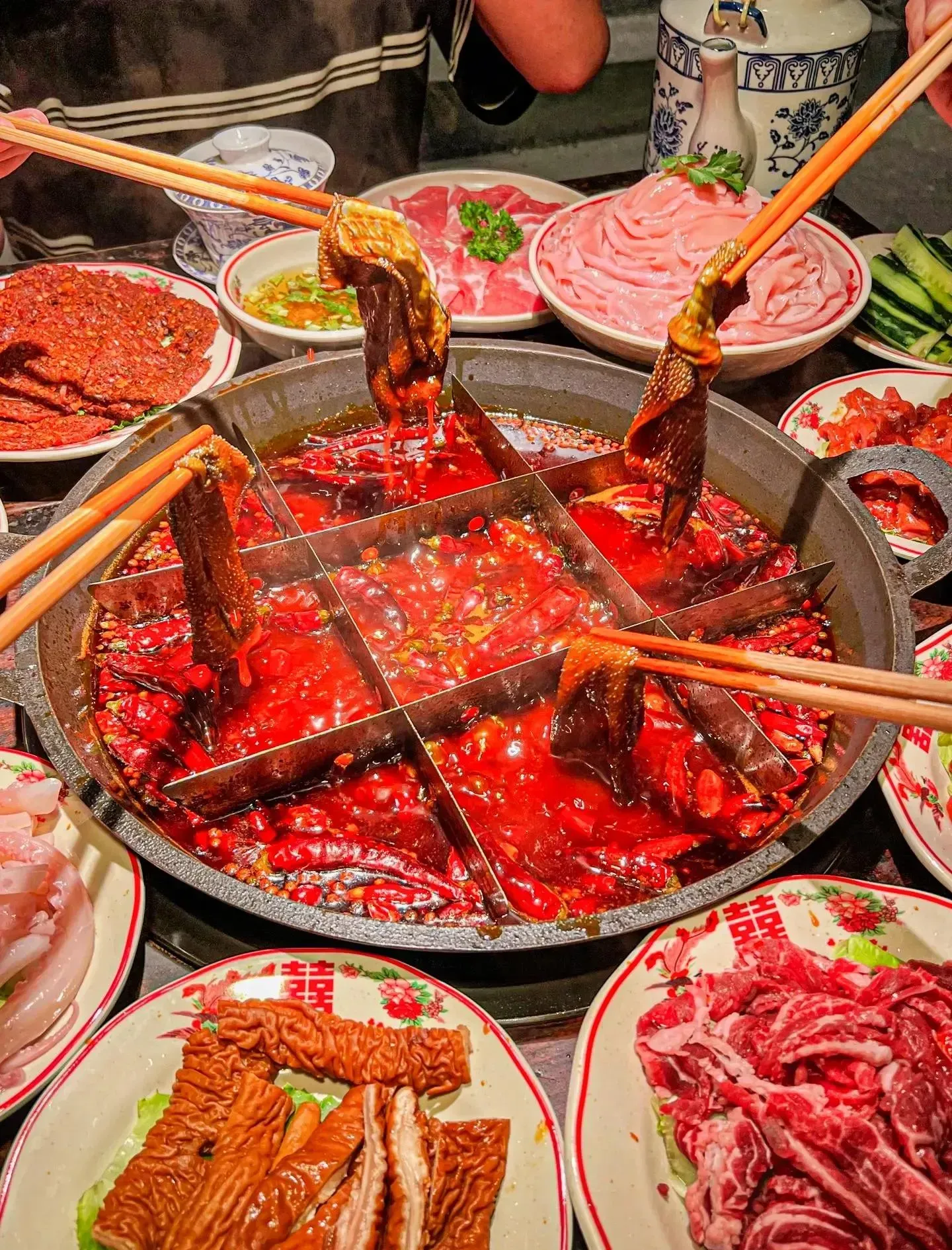
In Chongqing, we say: if you haven't sweat through your shirt at a hot pot restaurant, you haven't really eaten hot pot. And if you haven't cried while eating it, you haven't really lived.